


Cultivated Stillness: What Gardens Teach Us About Time, Mind, and Meaning
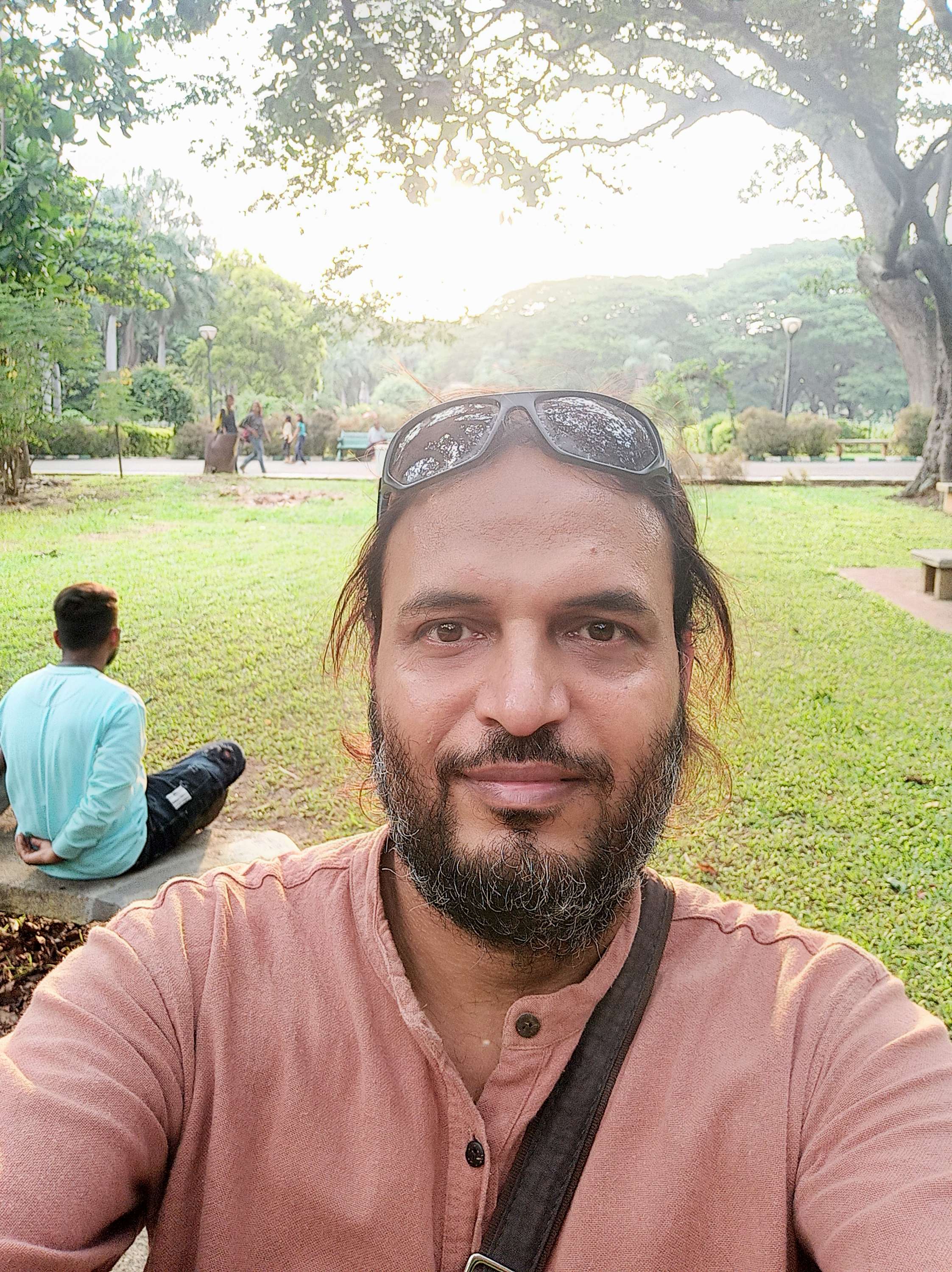

Entering the Green Pause
There's a moment just after passing through the gate—when the traffic noise hasn't quite faded but the canopy overhead has already begun its work—where something in the chest loosens. Not dramatically. Just enough to notice that it had been held.
We live inside schedules. Meetings stacked against deadlines, notifications arriving in clusters, the persistent hum of optimization that treats time like a resource to be mined rather than inhabited. The mechanical life doesn't announce itself with gears and levers anymore. It's subtler now: the glow of screens at midnight, the algorithmic feed that knows what we want before we do, the sense that every moment should produce something. Efficiency has become the water we swim in, invisible until we step out of it.
And gardens? Parks? They offer something the mechanical world cannot: cultivated stillness.
Not wilderness—these are not untouched forests or chaotic jungles. Not sterile either, though some bear the geometric precision of human intention. Gardens occupy a third category, a deliberate arrangement of living things that invites slowness without demanding it. They are structured enough to feel safe, wild enough to feel alive. In them, time doesn't vanish but changes texture. Minutes stretch. The mind, accustomed to jumping between tabs and tasks, finds itself following a single bird's movement across branches, or tracing the edge of a leaf's shadow on gravel.
What happens to attention when it has permission to rest?
The body knows before the thinking mind does. Shoulders drop. Breath deepens. The nervous system, tuned to constant vigilance in the urban grid, begins to unclench. This isn't mysticism—it's physiology meeting beauty, the organism remembering what it evolved alongside. Green. Space. The irregular rhythms of wind through leaves instead of the metronomic pulse of machinery.
Over the past few years, I've walked through several such spaces: the mist-wrapped discipline of Bryant Park in Kodaikanal, the Victorian catalogues-made-landscape at Ooty's Botanical Garden, the chromatic meditation of the Rose Garden. I've stood in Lalbagh before Republic Day, honoring the poet Tejaswi, and sat beneath the vast canopies of Cubbon Park with strangers who became temporary companions through shared reading. Delhi's Nehru Park and Lodi Gardens—each a different conversation between human intention and botanical patience.
Each garden carries its own history, its own architecture of care. But beneath their differences runs something common: they all create conditions for a quality of awareness that the mechanical world actively erodes. They don't give us stillness—we're not passive recipients. They cultivate the possibility. And cultivation, whether of roses or attention, requires both structure and surrender.
Why do we seek these green interruptions? Is it simply aesthetic pleasure, the eye's relief from concrete and glass? Or does something deeper occur when we slow our pace to match the patience of trees—when we enter spaces designed not for productivity but for presence?
The question isn't rhetorical. The gardens themselves seem to ask it, quietly, without insisting on answers. And perhaps that's the point: they offer a different kind of thinking, one less concerned with solving and more attuned to sensing. In a world that demands constant output, gardens remind us that some things grow slowly, that beauty doesn't optimize, that stillness—when cultivated rather than forced—might be a form of intelligence we've forgotten how to recognize.
What follows is an attempt to trace what these particular gardens have revealed. Not about horticulture or landscape design, though those threads will appear. But about consciousness, memory, and the subtle revolution that occurs when the body remembers it belongs to rhythms older than the mechanical age.
Hills, Mist, and Colonial Order
The hill stations of southern India were never neutral spaces. They were escape routes for colonial administrators fleeing the plains' heat, architectural assertions of British sensibility imposed on tropical altitude. Bryant Park in Kodaikanal and the gardens of Ooty—both the Botanical Garden and the Rose Garden—carry this history in their bones, in the geometric precision of their layouts and the deliberate importation of non-native species meant to remind homesick foreigners of England.
Walk through Bryant Park and you encounter symmetry as ideology. Flower beds arranged in exact patterns, pathways meeting at calculated angles, borders maintained with near-military discipline. The garden was established in 1908 by British forest officer H.D. Bryant, who gave it his name—a 20-acre botanical retreat designed to cultivate temperate plants at altitude, a deliberate assertion of British horticultural sensibility imposed on the Tamil hills. Every plant seems aware of its assigned position. Even the mist that rolls through Kodaikanal's valleys—wild, indifferent to human schemes—cannot quite disturb the park's insistence on order.
There's something both admirable and unsettling in this. The care is evident: colors arranged for maximum visual impact, specimens labeled for educational purposes, maintenance teams ensuring that chaos never gains a foothold. But what gets lost in such rigorous curation? Does a garden that admits no wilderness also admit no wildness in the mind that walks through it?
The Government Botanical Garden in Ooty, established in 1847-1848, takes this impulse further. It was created by the Marquess of Tweedcale, then Governor of Madras, based on plans by architect William Graham McIvor—conceived as both living encyclopedia and horticultural development project for the Nilgiris. Walk its 22 hectares of terraced slopes and you're moving through Victorian science made landscape—each section a chapter, each specimen a footnote in the empire's attempt to know and therefore control the natural world. The Italian Garden, the Conservatory with its glasshouse exoticism, the fossilized tree trunk said to be twenty million years old: all speak to an Enlightenment faith that understanding requires categorization, that knowledge means naming and arranging.
And yet. The trees have outlived their British planters. The garden that began as imperial assertion has become something else through decades of local stewardship—a public commons, a weekend destination for families, a refuge that no longer serves colonial purposes even as it bears their architectural fingerprints. Can a space transcend its origins? Or do places remain forever marked by their founding intentions?
The Government Rose Garden in Ooty complicates this further. Opened to the public in 1995, it's less historically weighted than its older neighbor, yet it continues the same aesthetic philosophy: nature as spectacle through deliberate arrangement. Twenty thousand rose bushes, over four thousand varieties, terraced across ten acres in a chromatic gradient that shifts from white through pink to deepest crimson. The effect is overwhelming—not wild abundance but cultivated profusion, beauty as systematic enterprise.
There's meditation possible here, though perhaps not the kind that comes from untamed wilderness. Walking among rows of hybrid teas and floribundas, the mind settles into pattern recognition: form repeating with variation, color as theme and variation, the strange comfort of predictability married to organic irregularity. Each rose bush is pruned, fed, protected from disease. Each bloom exists because someone decided it should, because human effort maintains conditions that wouldn't naturally occur at this altitude.
Is this devotion or domination?
The colonial gardens embodied both. They represented territorial control—the British planting English oaks and eucalyptus thousands of miles from home, remaking landscapes to ease psychological displacement. But they also represented genuine botanical fascination, the wonder of encountering new species, the impulse to preserve and study rather than simply extract and destroy. The gardeners who maintained these spaces weren't merely instruments of empire. Many developed deep knowledge, genuine care. Their labor created beauty even while serving problematic power structures.
We inherit these contradictions. When I walk through Bryant Park's manicured beds or climb the Botanical Garden's slopes, I'm moving through contested ground—nature that has been ordered, classified, bent to human aesthetic preference, yet which still offers respite, still teaches attention, still provides the green pause that urban life denies.
Perhaps cultivated stillness always carries this tension. True wilderness asks nothing of us, indifferent to human presence. Gardens, by definition, require ongoing negotiation between control and growth, structure and emergence. The hill gardens of the colonial era simply make this negotiation visible, encoded in every pruned hedge and labeled specimen.
What they teach, if we're willing to look past their origins, is that order and aliveness aren't opposites. That discipline—whether in garden design or contemplative practice—can create conditions for flourishing rather than merely constraining it. That the mind, like a rose bush, sometimes benefits from careful tending, from the removal of what doesn't serve, from intentional shaping that respects the organism's nature rather than violating it.
Still, the question persists: whose order? Whose aesthetic? Whose version of nature counts as worthy of preservation?
The gardens don't answer. They simply continue growing, absorbing new histories, hosting new visitors, slowly becoming something their designers never imagined. Time erodes certainty. Mist settles over symmetry. And the stillness, cultivated decades ago for purposes both beautiful and troubling, remains available to anyone who enters with attention.
Cultivated Stillness and the Inner Landscape
There's a parallel worth tracing, though it requires care not to collapse into easy metaphor. The structured garden—with its pruned hedges, deliberate pathways, planned succession of blooms—resembles certain contemplative practices in ways that go beyond surface comparison. Both involve intentional shaping. Both require consistent attention. Both create conditions where something can emerge that wouldn't arise through neglect or chaos alone.
But the similarity only holds if we resist the urge to sentimentalize it.
A garden doesn't cultivate itself. Left unattended, it doesn't return to Edenic perfection—it becomes overgrown, choked with invasive species, or simply dies from lack of water. The romantic notion of "letting nature take its course" ignores the reality that gardens are agreements between human intention and botanical possibility. They exist in the space where will meets organism, where plan encounters weather, pest, season, and the plant's own imperatives.
The mind operates under similar constraints. Attention doesn't naturally settle into clarity through pure passivity. Consciousness, left entirely to its own devices, tends toward distraction, rumination, the worn grooves of habitual thought. Contemplative traditions—whether Buddhist meditation, Sufi dhikr, or secular mindfulness—all recognize this. They offer structures, techniques, disciplines meant to create conditions where awareness can settle, where the incessant commentary might quiet enough to perceive what lies beneath it.
But here the metaphor grows dangerous. Because gardens are external. You can walk away from them. The mind is the medium through which you experience everything, including walking away. And too much cultivation, too rigid a structure, can produce not clarity but rigidity—thought patterns as over-pruned as a topiary, awareness trained into narrow channels that exclude anything that doesn't fit the system.
This is where stillness and stagnation diverge.
A living garden changes. Seasons alter it. Individual plants die and are replaced. The gardener responds to what emerges rather than forcing every element into predetermined form. There's responsiveness, adaptation, a conversation between care and growth. Stagnant water, by contrast, doesn't flow. It breeds mosquitoes and develops a surface film. It appears calm but hosts no vitality.
The same distinction applies to states of mind. Cultivated stillness—if it's genuine—isn't frozen. It's not the blankness of dissociation or the forced serenity of suppressed emotion. It's more like the quiet of a forest pool: transparent enough to reveal depth, still enough that disturbance becomes visible, but alive with currents below the surface. You can sense what moves through it precisely because the surface has settled.
The esoteric traditions often use garden imagery for this reason, though they tend toward symbolic extremes. The chakras as lotus flowers blooming along the spine—a beautiful image, but one that can fossilize into literal belief, as if there are actual petals and stems inside the subtle body. Kundalini rising like a serpent through cultivated energy channels—powerful as metaphor, potentially delusional as dogma. The Zen garden with its raked gravel and positioned stones suggesting cosmic order achieved through minimalist precision.
What's useful in these images? What's trap?
They point toward something real: that interior experience has structure, that consciousness isn't formless chaos, that practices exist which alter awareness in repeatable ways. Breath techniques change nervous system activation. Sustained attention on sensation shifts the quality of perception. These aren't mystical claims—they're observable phenomena with neurological correlates.
But the imagery can seduce us into thinking we understand more than we do. The chakras become reified into pseudo-anatomical fixtures. Kundalini becomes a literal force that can "rise" incorrectly and cause damage. The garden of the mind becomes a place we believe we can fully map and control, rather than a domain we can influence but never master.
Perhaps the gardens we walk through physically offer a corrective. They remind us that cultivation is ongoing, never complete. That weather happens regardless of the gardener's plans. That beauty often appears in unplanned adjacencies—the volunteer seedling that improves the composition, the bird that brings seeds from elsewhere, the way light strikes wet leaves after unexpected rain.
Can interior cultivation maintain this flexibility? Can we tend to awareness without imposing such rigid structures that spontaneity dies? Can discipline coexist with openness?
The question isn't abstract. It shows up in daily practice—whether that practice is formal meditation or simply the attempt to move through the day with less reactivity, more presence. Too little structure and attention scatters, pulled by every passing impulse. Too much and awareness becomes armored, defended against anything that doesn't fit the prescribed pattern.
Gardens are alive because they're cared for, yes. But they're alive because they're still subject to forces beyond control—evolution, weather, the agency of insects and soil microbes, the particular genius of each plant species adapting to its conditions. The gardener doesn't create life. The gardener creates conditions where life can express itself in particular forms.
What would it mean to approach the mind this way? Not as territory to be conquered or wilderness to be tamed, but as ecosystem to be tended—where the tending matters but so does what arrives unbidden, where structure serves emergence rather than controlling it?
The colonial gardens, with their obsessive classification and imposed order, show us one extreme: the attempt to make nature legible through total organization. The romantic ideal of unspoiled wilderness shows us another: the fantasy that authenticity requires the absence of human intervention.
Cultivated stillness, if it's to mean anything beyond spiritual cliché, must navigate between these poles. It acknowledges that we shape our experience through attention and practice, while recognizing that consciousness exceeds our attempts to systematize it. It values discipline without mistaking discipline for enlightenment. It creates structures that can be abandoned when they no longer serve.
The garden teaches this by being what it is: neither wild nor mechanical, neither chaos nor museum. It grows. It responds. It requires care but cannot be fully controlled. And the stillness found within it—that brief suspension of the mechanical rhythm, that loosening of time's grip—emerges not from perfection but from the ongoing conversation between intention and aliveness.
Whether that stillness can be carried beyond the garden gate, whether it can inform how we meet the rest of existence, remains an open question. But at least the gardens give us a place to practice the asking.
Lalbagh and the Memory of Minds
Lalbagh Botanical Garden sprawls across 240 acres in the heart of Bangalore, older than the city's current incarnation, established in 1760 by Hyder Ali and expanded by his son Tipu Sultan. It predates British control, though the colonial period added its familiar signatures—the glasshouse modeled after London's Crystal Palace, the systematic plantings, the transformation of sultanate garden into public botanical institution.
But what strikes me about Lalbagh isn't primarily its history as landscape or colonial appropriation. It's what happened there just before Republic Day this year, and what that event suggests about how gardens can hold kinds of memory that monuments cannot.
The gathering was modest—poets, readers, admirers of Kuvempu's son, the Kannada writer Poornachandra Tejaswi. He wrote about nature not as romantic backdrop but as lived relationship, about the Western Ghats and their creatures with the precision of someone who'd actually paid attention. His work bridged scientific observation and aesthetic sensibility, refusing the false choice between empirical rigor and wonder. He died too young, at sixty-eight, and his memorial isn't a statue or plaque but the ongoing conversation his work generates among those who continue reading him.
So people gathered in Lalbagh. Not for official ceremony—this wasn't state commemoration—but for something quieter: recitation, discussion, the shared experience of language spoken aloud under trees. The garden became, briefly, a venue for honoring not power or military achievement or political legacy, but perception itself. The capacity to notice how light moves through forest canopy. The patience required to watch bird behavior closely enough to write about it accurately. The integration of scientific curiosity and poetic attention that Tejaswi embodied.
What does it mean to commemorate this way? To choose a garden rather than an auditorium, to honor a writer who wrote about forests by gathering among trees?
There's a coherence to it that formal memorials often lack. Tejaswi's work emerged from sustained attention to the non-human world—to birds, rivers, the rhythms of rural life in the Ghats. His consciousness was shaped by those encounters, his language carrying the textures of what he observed. To remember him in a botanical garden rather than a conference hall aligns the commemoration with the life's work being commemorated.
But it suggests something else too: that certain kinds of thought require certain kinds of space. That consciousness isn't infinitely portable, that where we think influences what we can think. The reading group gathering under Lalbagh's canopy wasn't engaged in atmospheric decoration—the setting wasn't incidental to the activity. The garden created conditions that indoor spaces, with their controlled climate and artificial light, cannot replicate.
This isn't mystical. It's about sensory environment and attentional field. Inside, awareness naturally contracts, focusing on immediate surroundings, the task at hand, the screen or page or speaker. The edges are defined: walls, ceiling, the clear demarcation of interior from exterior. Outside, under trees, with weather happening and birds calling and leaf shadows shifting across the ground, attention has to accommodate more variables. The boundary between focused task and ambient awareness softens. You're reading or listening, but you're also embedded in a larger context that doesn't disappear just because you're concentrating on words.
Tejaswi understood this. His writing about nature wasn't separate from his writing about consciousness—they were the same inquiry. How does awareness work when it's genuinely open to what's beyond the self? What changes in perception when you stop treating the environment as mere background to human drama?
Lalbagh, with its centuries of accumulated growth, its layers of history botanical and political, becomes a kind of answer to those questions. Not a verbal answer—the garden doesn't explain anything—but an experiential one. It demonstrates that life continues in forms that exceed human intention, that beauty persists through regime changes and architectural additions, that memory can be held in root systems and soil composition as much as in stone monuments.
The glasshouse, built in 1889, still stands—Victorian engineering housing tropical plants, an architectural assertion of British presence now maintained by the Karnataka state. Hyder Ali's original plantings have long since died or been replaced, but the garden he envisioned continues, transformed by successive caretakers. Tipu Sultan's contributions—the introduction of new species, the expansion of the grounds—remain as living legacy rather than static artifact.
And now Tejaswi's memory joins that layered history, not through permanent installation but through periodic gathering, through readers returning to his work in a space that resonates with what he wrote about. The commemoration isn't fixed. It has to be renewed. Each reading group, each shared discussion, each person discovering his essays for the first time—these constitute the ongoing memorial.
There's something democratic about this form of remembering. It doesn't require institutional approval or funding for bronze casting. It asks only that people continue caring, continue reading, continue finding value in the particular quality of attention Tejaswi cultivated. The garden provides venue, but the memory lives in the minds that gather there.
This stands in sharp contrast to how we typically memorialize. The statue in the square, the building named after the powerful, the monument that insists on permanence through material durability—these reflect a different theory of memory. They assume that bronze and marble last longer than consciousness, that physical persistence matters more than living transmission.
But consciousness is the only medium through which any memorial has meaning. The statue of a forgotten leader might stand for centuries, but if no one remembers why it was erected, what it signified, what the person actually did or thought—does it still function as memory? Or has it become mere object, weathered metal occupying space?
Gardens occupy middle ground. They're more durable than spoken word, less permanent than stone. They require care to persist but don't demand the industrial resources of monument-building. They can hold memory through association—this tree planted in remembrance of that person, these paths walked by previous generations—while remaining primarily themselves, living systems rather than symbolic representations.
When we gathered to honor Tejaswi in Lalbagh, we weren't asking the garden to represent him. We were using its aliveness as context for engaging with his work, which was itself engagement with aliveness. The circle closes: writer attentive to nature, readers gathering in nature to be attentive to writer, the garden indifferent to all of it yet making it possible through simply being what it is.
Can public parks become venues for this kind of cultural memory? Not replacing traditional memorials but offering alternative practices—gatherings that animate rather than commemorate, that choose presence over permanence, that honor thought and perception rather than only power and achievement?
The question extends beyond any single garden. It asks what we value enough to remember, and how we choose to do that remembering. Lalbagh suggests one possibility: that the best memorial for a mind attuned to living systems might be continued attention within living systems. That consciousness honors consciousness not through freezing it in time but through keeping the conversation alive.
The trees know nothing of this. They absorb carbon dioxide and release oxygen regardless of human significance. But we need venues that aren't purely functional, spaces that allow thinking to occur in the presence of what exceeds thought. Gardens provide that. And sometimes, if we're fortunate, they become places where memory and meaning can be held lightly, without the crushing weight of official permanence, in the space between cultivation and wildness where both mind and garden breathe.
Cubbon Park: Thinking Together Under Trees
Cubbon Park occupies 300 acres in central Bangalore, established in 1870 and named after Sir Mark Cubbon, the longest-serving commissioner of Mysore. The usual colonial lineage: British planning, imported species alongside native growth, the imposition of geometric order on what had been scrubland. But over a century and a half, the park has absorbed purposes its designers never imagined.
On weekend mornings, beneath one particular cluster of trees whose species I never thought to check, a reading group gathers. Not formally organized, no institutional sponsorship, just people who've learned through word-of-mouth or previous attendance that if you show up at a certain time with something to read or discuss, you'll find others doing the same.
I joined them once, carrying a book whose title I've since forgotten but whose subject was consciousness—some synthesis of neuroscience and phenomenology, the kind of text that tries to bridge empirical research and first-person experience. Others brought philosophy, poetry, novels, essays on ecology or politics or mathematics. The only common thread was intention: people choosing to spend time thinking together rather than alone, outdoors rather than in libraries or cafes, in a public park accessible to anyone rather than in private spaces that require membership or payment.
What happens in such gatherings?
The conversation doesn't follow academic protocol. No one presents a paper. There's no moderator enforcing topic or structure. Someone mentions an idea from what they're reading, and others respond—sometimes with related concepts from their own material, sometimes with personal experience, sometimes with skeptical questions that redirect the discussion. Attention moves between individual focus and collective exploration, between the page and the group, between abstract ideas and the immediate environment where those ideas are being discussed.
And that environment matters more than it might initially seem.
We weren't inside a seminar room where climate control and soundproofing create stable conditions for sustained argument. We were under trees, with traffic noise from surrounding streets, with other park users passing by—joggers, families, people walking dogs, the occasional curious onlooker wondering what this cluster of people with books was doing. The boundaries were porous. The discussion could be interrupted by a particularly loud vehicle or a sudden wind shaking leaves overhead. The light changed as clouds moved. Temperature fluctuated. Bodies shifted position on the grass or stone benches, seeking comfort that never quite stabilized.
Why choose this instability? Why not meet somewhere controlled, comfortable, designed for focused intellectual exchange?
Because maybe that instability is the point. Or at least, maybe it prevents a certain kind of rigidity that indoor, formal settings can encourage—the sense that ideas exist in hermetically sealed spaces, that thinking happens best when maximally protected from the mess of embodied existence.
The reading group under trees in Cubbon Park enacted a different premise: that thought occurs in bodies, in weather, in the presence of non-human life that couldn't care less about our philosophical debates. That consciousness isn't a pure medium occasionally interrupted by physical sensation, but is always already embedded in sensory experience, shaped by environment, influenced by whether you're sitting comfortably or need to shift weight, whether you're slightly too warm or shivering in unexpected shade.
The neuroscience supports this, though we didn't need neuroscience to tell us what the body already knows. Cognition is embodied. Environmental factors influence cognitive performance. Green space exposure correlates with improved attention and reduced mental fatigue. But the reading group wasn't applying research findings—it was enacting an intuition that thinking together outdoors creates possibilities different from thinking alone indoors.
Can public parks become laboratories of consciousness?
The phrase risks sounding grandiose, as if what happened in Cubbon Park constituted controlled experimentation. It didn't. But "laboratory" originally meant a place for labor, for work, before it became exclusively associated with scientific method and sterile conditions. In that older sense, the park became a workspace for a particular kind of labor: the collective effort to think clearly, to question assumptions, to hold multiple perspectives simultaneously, to trace the implications of ideas while remaining aware that ideas are always partial, always embedded in contexts that exceed them.
What made it collective rather than merely parallel?
Not agreement. The discussions often revealed deep disagreement about interpretation, value, methodology. Someone would make a claim and another would challenge it, not combatively but genuinely seeking to understand whether the claim held up under scrutiny. The public setting seemed to encourage a certain generosity—you couldn't simply dismiss someone's position and leave, because you were sharing space, because you might see them again next week, because the social contract of the park required basic civility even in disagreement.
But beyond civility, there was something about the shared vulnerability of being outside, visible to passersby, using public space for something that wasn't its designated purpose. Parks are meant for recreation, exercise, family outings. Not philosophy discussions. By repurposing the space, the group created a minor commons—not claiming exclusive rights but temporarily inhabiting the park for thinking together, demonstrating that public space can host intellectual life without requiring institutional permission.
This matters more than it might seem. So much of contemporary intellectual exchange happens in gatekept venues: universities requiring tuition, conferences requiring fees, publications requiring subscriptions. The free circulation of ideas—genuinely free, not just open-access PDFs behind institutional logins—occurs primarily online, where it's mediated by algorithms and platform incentives and the particular distortions of disembodied text.
The reading group in Cubbon Park offered something different: embodied, public, free, face-to-face exchange that anyone could join simply by showing up with curiosity. No credentials required. No proof of expertise. Just willingness to engage seriously with ideas and the people thinking about them.
Did it produce original insights? New theories? Breakthrough understandings?
Probably not, or at least not in any form that could be captured and published. The value wasn't in generating novel intellectual property but in the shared practice of attention—learning to listen while disagreeing, to hold uncertainty without rushing to resolution, to think alongside others whose frameworks differed from your own.
And the trees? What role did they play beyond providing shade?
They modeled a different temporality. While we discussed consciousness and meaning, trying to articulate subtle distinctions or challenge each other's claims, the trees continued their slower work—photosynthesis, growth, the patient accumulation of mass through processes that don't care about human significance. They'd been there before any of us arrived and would remain after we left. They provided scale, a reminder that the urgency we bring to ideas exists within larger timeframes that proceed regardless.
This wasn't humbling in a way that diminished the conversation's value. It was contextualizing. The ideas mattered, the discussion was worth having, but it was also finite, provisional, one iteration in an ongoing process. The trees made that visible without requiring comment.
Cubbon Park, like the other gardens, creates conditions. It doesn't determine what happens within those conditions, but it shapes possibility. Its openness invites experimentation. Its beauty encourages lingering rather than rushing. Its publicness demands negotiation—with other users, with ambient noise, with the unpredictability of weather and wildlife.
The reading group took advantage of these conditions to create something fragile and valuable: a temporary commons of shared attention, neither purely intellectual nor purely social, where thinking could occur in the presence of others and in the presence of the more-than-human world. Where the cultivated stillness the park offered could be channeled not into solitary contemplation but into collective inquiry.
Whether such experiments can scale, whether they represent a model for something larger, remains uncertain. But they demonstrate that public parks can host forms of intellectual and cultural life that institutional spaces often exclude—not through opposition but through offering different conditions, different possibilities, different relationships between thought and place.
And perhaps that's enough: to show that consciousness need not be privatized, that serious thinking can occur in public space, that gardens serve not only individual restoration but collective exploration. That under the right trees, with the right people, attention can become not just personal practice but shared experiment in what minds can do together when surrounded by what exceeds them.
Delhi's Green Witnesses
Delhi's parks carry weight differently than Bangalore's. The capital's green spaces exist within denser layers of political history, more contested narratives of power and its monuments. Nehru Park and Lodi Garden—both within a few kilometers of each other in central Delhi—represent distinct approaches to how landscape and memory intersect, how gardens can witness history without becoming propaganda.
Nehru Park opened in 1969, twenty years after independence, named for the first prime minister whose vision of modern India still echoes in its design. It's a post-colonial park, created not by British administrators but by a newly independent nation attempting to define itself through public space. The landscaping reflects mid-century ideals: open lawns, walking paths that speak to technological optimism and democratic leisure. A space where citizens—not subjects—could gather.
But what does it mean now, more than fifty years later?
Walking through Nehru Park on a winter evening, you encounter the usual spectrum of park life: children playing, elderly couples taking slow circuits, young people sprawled on grass with phones, the occasional solitary walker lost in thought. The park doesn't announce its ideological origins loudly. It simply provides green breathing room in a city choked with vehicles and construction, where air quality makes outdoor activity a calculated risk much of the year.
The irony is sharp. A park created as emblem of post-independence optimism now serves primarily as respiratory refuge from the environmental degradation that accompanied India's industrial growth. The vision of modernity that Nehru represented—scientific, rational, oriented toward progress through technology—has produced both genuine development and catastrophic pollution. The park bearing his name offers temporary escape from consequences he didn't live to see.
Does this diminish the space's value? Or does it simply demonstrate how purposes shift, how what's needed changes even as the physical infrastructure remains?
There's no memorial to Nehru within the park itself—the naming suffices. And perhaps that's fitting. The best commemoration might be continued use rather than static monument, the ongoing proof that public space still matters, that citizens still seek green refuge even in an age of air-conditioned malls and digital entertainment.
But the park also reveals limitations. It's maintained, but not lavishly. Budget constraints show in patchy grass, aging infrastructure, the sense that maintenance is reactive rather than proactive. Public space requires public investment, and when governments prioritize highways over parks, concrete over canopy, the message becomes clear: green breathing spaces matter less than the machinery of commerce.
Still, people come. The park persists. And on certain evenings, when pollution levels dip and temperature becomes bearable, it fulfills something close to its original promise—a commons where strangers share space without requiring transaction, where leisure isn't monetized, where simply being outdoors among trees counts as legitimate use of time.
Lodi Gardens operates on a different frequency entirely.
Established formally in 1936 by the British, the gardens incorporate tombs dating to the fifteenth and sixteenth centuries—remnants of the Lodi and Sayyid dynasties that ruled Delhi before the Mughals. The landscape strategy was characteristic colonial preservation: turn historical ruins into picturesque garden features, domesticate the past by embedding it in managed landscape.
But the effect, however calculated in origin, produces something genuinely strange and worth attention.
You're walking among trees—massive specimens, some centuries old—and suddenly encounter Muhammad Shah's tomb, built in 1444. Stone architecture weathered by five hundred monsoons, pigeons nesting in decorative niches, the geometry of Indo-Islamic design still asserting its proportions despite vegetation growing from cracks in the walls. The tomb isn't cordoned off or museumified. You can walk around it, touch the stone, sit in its shade. It exists as functional ruin, neither preserved in amber nor allowed to crumble entirely.
What does it mean to share a park with the dead?
Not metaphorically dead—actually dead, bodies interred beneath these structures centuries ago. The tombs aren't symbols or monuments in the usual sense. They're graves, originally built as declarations of power and piety, now serving primarily as architectural punctuation in a public garden.
Time layered upon time: fifteenth-century tombs, twentieth-century British landscaping, twenty-first-century morning walkers doing circuits past medieval graves while checking fitness trackers. The layers don't synthesize into coherent narrative. They coexist, each period's assumptions and aesthetics visible but not necessarily in conversation with each other.
This is what gives Lodi Gardens its particular quality—the refusal of historical tidiness. It doesn't present a curated story of Delhi's past. It shows fragments: tombs from different dynasties, architectural styles shifting across centuries, British horticultural choices juxtaposed with Mughal stone, contemporary joggers streaming past in athletic wear while elderly couples photograph sunset behind Bara Gumbad.
The trees witness all of it without comment. A banyan might be two hundred years old, rooted before British arrival, still growing while empires rise and collapse around it. Its timescale makes human history look like brief turbulence, momentary arrangements that trees simply absorb and outlast.
Is there cultivated stillness here? Or something different—a kind of temporal vertigo that comes from moving through spaces where multiple eras remain simultaneously visible?
The garden's beauty is undeniable: the rose garden's formal beds, the lake where winter migrants arrive, the canopy coverage that creates microclimates cooler than surrounding city. But it's beauty haunted by impermanence, every architectural assertion gradually succumbing to weather and vegetation, every attempt at permanence slowly failing.
The tombs were built to last forever. They haven't. They're lasting, which is different—persisting in damaged form, function transformed from mausoleum to park feature, meaning leached away except for what archaeologists and historians reconstruct. The bodies beneath are long decomposed. The dynasties are footnotes. The religious and political significance that made these structures matter to their builders has evaporated except as scholarly knowledge.
What remains is stone in garden, shape in landscape, a particular quality of light filtering through arches while parakeets shriek overhead.
There's instruction in this, if instruction is what we're seeking. Not moral lesson—nothing so clean—but demonstration of what persists and what doesn't. The stone lasts longer than the power it celebrated. The trees outlive the empires. The garden absorbs history without being crushed by it, incorporating ruins as elements in ongoing composition rather than as final statements demanding reverence.
Walking Lodi Gardens teaches patience, or at least suggests its value. The joggers doing circuits for cardiovascular health, the yoga practitioners on the lawns, the photographers chasing golden hour light—all moving through space where patience has already been proven as strategy. The trees didn't rush. The gardens evolved slowly. Even decay happens gradually enough that you can watch it without alarm, stone eroding grain by grain across centuries.
Can this quality of temporal awareness transfer beyond the garden? Can we carry it into the accelerated rhythms of contemporary urban life, where everything demands immediate response and long-term thinking is measured in fiscal quarters rather than centuries?
Probably not directly. The garden offers respite, not solution. But respite matters. Stepping into Lodi Gardens from Delhi's traffic—the shift from noise and exhaust to relative quiet and green—creates a perceptual reset. The nervous system registers the change even if the mind is too busy to notice immediately. Cortisol levels drop. Heart rate variability improves. The body knows it's in a different environment before consciousness fully acknowledges the transition.
And then, if you stay long enough, awareness follows physiology. The rushing eases. The need to hurry somewhere else becomes less pressing. You notice details: particular bird calls, the way afternoon light strikes specific branches, the texture of stone that's been weathered by five centuries of seasonal change.
The gardens don't erase Delhi's intensity. Step back outside the gates and it returns immediately—traffic, crowds, the sheer density of human aspiration and struggle compressed into urban geography. But for the duration of the visit, another temporality becomes available. One where the urgent isn't necessarily important, where what lasts does so by not forcing permanence, where beauty and decay aren't opposites but phases in ongoing transformation.
Delhi's green witnesses—Nehru Park with its post-independence idealism slowly weathering, Lodi Gardens with its layered centuries and patient trees—offer different lessons than the hill gardens of the south or Bangalore's botanical spaces. They show how landscapes hold memory without speaking, how history sediments into environment, how the past remains present not as narrative but as physical residue still shaping current experience.
Whether we call this cultivated stillness or something else—temporal refuge, historical presence, botanical patience—depends on what we're seeking. But the gardens provide the conditions. And in a capital city where power and its symbols dominate the landscape, where every monument tries to assert some version of permanence or significance, there's subversive value in spaces that simply grow, slowly absorbing whatever history deposits while remaining primarily themselves: trees, grass, stone, the ongoing conversation between human intention and botanical indifference.
Nature, Attention, and the Science of Restoration
The subjective reports are consistent enough to warrant investigation: people feel better after time in green space. Clearer thinking, reduced anxiety, improved mood, a sense of mental refreshment that's difficult to articulate but unmistakable in experience. For centuries this was simply folk wisdom, the common-sense observation that walking in a park helps clear the mind. But in recent decades, researchers have attempted to understand the mechanisms behind what our ancestors took for granted.
Attention restoration theory, proposed by environmental psychologists Rachel and Stephen Kaplan in the 1980s, offers one framework. The core insight is straightforward: attention comes in different modes, and urban life exhausts one mode while green spaces restore it.
Directed attention—the capacity to focus on tasks, filter distractions, maintain concentration on what's important while ignoring what isn't—functions as a limited resource. Every time you resist checking your phone, stay focused during a meeting, navigate traffic, or make yourself work when you'd rather rest, you're depleting this capacity. Modern urban environments demand constant directed attention: don't step into traffic, follow the GPS instructions, remember which platform your train departs from, track the time so you're not late, process the flood of signage competing for cognitive space.
It's exhausting. Not physically, though physical fatigue can compound it, but cognitively. The experience of mental fog, difficulty concentrating, irritability when interrupted—these signal depleted attentional resources.
Green spaces, according to the theory, restore this capacity through a different mode: fascination. Natural environments contain elements that capture attention without requiring effort—the movement of leaves in wind, patterns of light through branches, bird calls, flowing water. This "soft fascination" engages awareness gently, allowing the directed attention system to rest and replenish.
The research supports this. Studies show improved performance on attention-demanding tasks after time in nature compared to equivalent time in urban settings. Even viewing images of natural scenes produces measurable cognitive benefits, though smaller than actual immersion in green space. Brain imaging reveals different patterns of neural activation when viewing natural versus built environments—reduced activity in regions associated with rumination and negative thought patterns, increased connectivity in networks linked to attention and working memory.
But can we trust these findings? Should we?
The sample sizes are often modest. The effects, while statistically significant, aren't always large in practical terms. And there's an obvious confound: people who choose to spend time in parks might differ in systematic ways from those who don't, making causality difficult to establish definitively. The research suggests correlations and plausible mechanisms, but it hasn't definitively proven that nature exposure causes cognitive restoration in all contexts for all people.
Still, the convergence of subjective experience, evolutionary logic, and empirical evidence creates a persuasive picture. Humans evolved in natural environments. Our perceptual systems, our stress responses, our default patterns of attention developed in contexts radically different from contemporary cities. The mismatch between evolved capacity and current demand helps explain why urban life feels depleting in ways that green spaces don't.
Embodiment adds another layer to this understanding. Cognition doesn't happen solely in the brain—it's distributed throughout the nervous system, influenced by bodily state, shaped by sensorimotor experience. When you walk through a garden, you're not just exposing your visual cortex to different stimuli. You're changing your entire physiological state.
Heart rate variability—the variation in time between heartbeats—serves as a marker of autonomic nervous system flexibility. Higher variability generally indicates better stress resilience and emotional regulation. Studies show that time in nature increases heart rate variability, suggesting a shift toward parasympathetic dominance, the "rest and digest" mode as opposed to "fight or flight" sympathetic activation that urban environments tend to trigger.
Cortisol levels drop. Blood pressure decreases. Immune markers improve. These aren't subjective impressions—they're measurable physiological changes that occur reliably when people spend time in green space, particularly when that time involves walking or other gentle movement rather than merely sitting.
The Japanese practice of shinrin-yoku—forest bathing—has generated substantial research documenting these effects. Walking slowly through forests, attending to sensory experience without goal-directed activity, produces benefits that persist for days: improved sleep, reduced inflammation markers, enhanced natural killer cell activity suggesting immune function improvement. The mechanisms likely involve phytoncides—airborne chemicals released by trees—combined with reduced stress and increased parasympathetic tone.
Western gardens and parks may not offer the same phytoncide concentrations as Japanese forests, but they provide enough of the relevant factors to trigger similar responses. The key seems to be sensory richness combined with low cognitive demand: environments complex enough to be interesting but not so demanding that they require constant vigilance.
This helps explain why cultivated gardens work as restoration spaces despite being thoroughly human-designed. They offer the perceptual qualities that evolution primed us to find restorative—varied greenery, fractal patterns in plant structure, evidence of water, spatial complexity that invites exploration—without the danger of actual wilderness. The rose garden in Ooty and Lalbagh's landscaped grounds provide enough natural elements to engage soft fascination while remaining safe, predictable, civilized.
But here the science reaches its limits, or at least its reductions.
Knowing that attention restoration theory explains part of why gardens feel restorative doesn't exhaust their significance. Understanding the neurochemistry of stress reduction doesn't capture what it means to sit beneath a banyan tree in Lodi Gardens while medieval tombs weather slowly around you. Measuring cortisol changes doesn't address the question of meaning—why we seek not just physiological regulation but contact with something that exceeds the purely human.
The research tends to frame nature exposure as therapeutic intervention, a kind of environmental medicine for treating urban-induced pathology. There's truth in this framing, but also limitation. It positions nature primarily as resource for human wellbeing rather than as reality with its own value, its own existence independent of our needs.
Gardens occupy an ambiguous position in this regard. They're nature modified for human purposes, explicitly designed to serve aesthetic and recreational functions. They exist because we made them, maintain them, find them useful. Yet they also exceed purely instrumental value. The trees in Cubbon Park provide shade and oxygen, but they also simply are—growing according to their own imperatives, hosting ecosystems of insects and birds, participating in processes that have nothing to do with human restoration needs.
Perhaps the science of restoration misses something by focusing solely on what nature does for us. The cultivated stillness available in gardens emerges not just from their restorative effects on depleted attention but from contact with aliveness that doesn't center human concerns. The bird doesn't sing to soothe your nervous system. The tree doesn't grow to provide you with fractal visual patterns. These things happen, and you can benefit from them, but the benefit is secondary to the fact of their autonomous existence.
What changes in awareness when you recognize this? When the garden stops being merely therapeutic resource and becomes encounter with what exists independently?
The nervous system still calms. Attention still restores. But the experience gains additional dimension—something closer to humility or perspective or recognition of context. You're not just using the garden to fix your depleted cognitive resources. You're temporarily participating in processes that preceded you and will continue after you leave, that function perfectly well without human presence, that occasionally align with human needs but don't exist for that purpose.
The science documents the intersection—how our evolved biology responds to environmental features that gardens concentrate. This is valuable knowledge, applicable to urban planning, public health, design of therapeutic spaces. But it doesn't capture the full encounter, the sense of participating however briefly in rhythms not governed by productivity demands or digital acceleration.
Can cultivated stillness be practiced beyond park gates? Can the quality of attention that green spaces facilitate transfer to other contexts?
The research suggests limited portability. You can't simply will yourself into the parasympathetic state that nature exposure produces. You can't restore depleted attention through pure intention—that would require using the very capacity you're trying to replenish.
But perhaps the practice is different than direct transfer. Perhaps time in gardens trains a kind of meta-awareness—the ability to notice when you're operating from depletion, when directed attention is exhausted, when the nervous system needs conditions different from constant vigilance and goal pursuit. And having noticed, you can sometimes create those conditions or at least refrain from demanding performance that your current state can't deliver.
The garden teaches by example rather than prescription. It shows what restoration feels like in the body, what happens to thought when it's not forced, what becomes available when urgency releases its grip. You can't manufacture these conditions everywhere. But you can recognize when you need them, and you can seek them out rather than pushing through perpetual depletion.
This is modest compared to promises that meditation or mindfulness or spiritual practice will permanently transform consciousness into unshakeable equanimity. But modesty has its virtues. The garden doesn't promise enlightenment. It offers temporary respite, physiological reset, a chance for awareness to settle enough that clarity becomes possible. Whether you do anything with that clarity—whether it informs subsequent choices or simply evaporates under the next wave of demands—remains your responsibility.
The science gives us language for something humans have always known: we need contact with living systems that aren't entirely shaped by human intention, that grow at their own pace, that embody temporalities different from the mechanical rhythm of scheduled productivity. We need this not just psychologically but physiologically, not just for mood improvement but for basic regulatory functions that evolution calibrated to natural environments.
Gardens provide concentrated doses of what wilderness offered our ancestors. Not the same—too controlled, too safe, too obviously designed—but enough. Enough green, enough complexity, enough aliveness independent of human purpose. Enough to let attention rest, to let the nervous system remember states other than constant mobilization, to let the body recognize rhythms it evolved alongside but that contemporary life mostly excludes.
And sometimes, if conditions align, enough to produce moments where the restoration goes beyond biology into something harder to name—where cultivated stillness opens into genuine wonder, where the gap between self and world briefly softens, where consciousness touches something that research instruments can't quite measure but that makes the whole human enterprise of seeking meaning feel less absurd.
The gardens can't guarantee this. They just create conditions where it becomes more likely. Which is all any practice can offer—conditions, not certainty. Cultivation, not control. Stillness that arrives when it arrives, never quite the same way twice.
Leaving the Garden, Carrying the Stillness
The gate marks a threshold you'll cross again, returning to the traffic and timekeeping, the screens and schedules, the mechanical world that doesn't pause simply because you've spent an hour among trees. The transition is abrupt enough to be jarring. Five steps ago: birdsong and leaf shadow. Now: exhaust fumes and honking, the immediate demand to navigate pedestrians and vehicles, to reorient toward destination and purpose.
What remains?
The body remembers first. Shoulders that dropped in the garden might stay lowered for a few minutes, maybe longer. Breath that deepened doesn't instantly return to shallow chest breathing, though it will eventually as stress accumulates. The parasympathetic tone that emerged under the canopy persists briefly, a kind of physiological afterglow that measurements could detect even if awareness doesn't register it consciously.
But something else might remain too, harder to quantify. A quality of attention, perhaps. Or a memory of what attention felt like when it wasn't being pulled in eight directions simultaneously. The garden demonstrated that focus without force is possible, that awareness can settle without suppression, that stillness and aliveness aren't contradictory.
Can this be practiced beyond park gates?
The honest answer is: partially, inconsistently, with limited success. You can't recreate the garden's conditions in a meeting room or subway car. You can't summon soft fascination at will when surrounded by concrete and artificial light. The environmental factors that produced restoration aren't portable in any simple sense.
But maybe the practice isn't about recreation. Maybe it's about recognition—learning to notice when you're operating from depletion, when directed attention has been exhausted, when the nervous system is stuck in mobilization mode that no longer serves any useful purpose. The garden teaches what restoration feels like in the body. That felt sense becomes a reference point, something to notice the absence of.
And noticing absence creates possibility for response. Not always—often you're genuinely trapped in circumstances that don't permit rest, that demand continued performance regardless of capacity. But sometimes there's space, brief windows where you could choose differently: take a longer route that passes through greenery instead of the efficient path through concrete, pause at a window that frames sky instead of immediately returning to the task, acknowledge that pushing through might produce worse results than stepping away briefly.
These aren't grand transformations. They're tactical adjustments, minor course corrections that might preserve some portion of what the garden offered. They assume you can't live in the garden—you have responsibilities, deadlines, people depending on you, legitimate demands that won't vanish because you've cultivated interior stillness.
But they also assume you're not entirely powerless against the mechanical rhythm. That some choices remain available, even in constrained circumstances. That cultivated stillness, while fragile and easily disrupted, isn't so fragile that a single exposure to traffic noise destroys it completely.
The gardens I've walked through—Bryant Park's disciplined beds, the Botanical Garden's Victorian classifications, Lalbagh's layered histories, Cubbon Park's reading circles, Lodi's patient ruins, Nehru Park's weathered idealism—each offered different forms of this basic teaching. Each created conditions where attention could rest, where time could shift texture, where the body could remember states that contemporary life systematically denies.
None promised permanent transformation. None suggested that a single visit would rewire consciousness or solve the structural problems that make urban life depleting. They simply provided temporary refuge, and in that refuge, demonstrated that different ways of being remain possible even if they're not currently available.
Why does this matter? Why seek cultivated stillness at all instead of simply accepting the mechanical pace as inevitable, adapting to constant stimulation and chronic depletion as the price of modern existence?
Because adaptation to pathology is still pathology. Because the nervous system that evolved for periodic stress followed by recovery doesn't function well under chronic activation. Because attention that's always divided and never allowed to settle produces thought that's scattered, reactive, unable to sustain the focus required for complex understanding or genuine creativity. Because meaning—however we define it—seems to require some capacity for reflection, some pause between stimulus and response where choice becomes possible.
The gardens suggest that this capacity doesn't have to be cultivated through heroic effort or esoteric practice. It emerges naturally when conditions support it—when the environment offers complexity without threat, beauty without demand, aliveness that doesn't require your constant management.
But the gardens also reveal a deeper question, one they can't answer: what would it mean to organize society differently? To prioritize green space not as luxury amenity but as basic infrastructure? To recognize that human consciousness functions better in certain environments and worse in others, and to design accordingly?
The reading group in Cubbon Park, the gathering to honor Tejaswi in Lalbagh—these hint at possibilities beyond individual restoration. They suggest that gardens can host forms of collective life, shared practice, cultural memory that don't require institutional permission or commercial transaction. That public space, when genuinely public and adequately maintained, becomes venue for activities that no one planned but that emerge when people have access to environments that support something beyond mere survival.
This is political, though not in the usual sense. It doesn't divide along partisan lines. It asks instead about what we value collectively, what we're willing to invest in, what kind of environments we believe humans need to flourish rather than merely function.
The colonial gardens, with their history of domination disguised as cultivation, complicate this question. They remind us that green space isn't politically neutral, that who gets access to well-maintained parks and who doesn't reflects larger patterns of inequality. That the same impulse to organize and control nature can serve both genuine care and oppressive power.
But refusing to engage with gardens because of their problematic origins seems worse than critically inhabiting them. The trees don't carry colonial guilt. The restoration they offer doesn't become tainted because British administrators planted some of them. Historical awareness matters—we should know whose labor built these spaces, whose vision shaped them, whose exclusion the original design enforced. But that awareness needn't prevent present use or future transformation.
Gardens change. They absorb new purposes, new communities, new forms of care. The Botanical Garden that began as imperial catalogue becomes venue for local families' weekend outings. Lalbagh transitions from sultan's pleasure ground to colonial institution to public commons. Cubbon Park hosts reading groups its designers never imagined. The spaces persist through radical shifts in political context, continuously reinterpreted while maintaining their basic function: providing green refuge in urban density.
Can interior cultivation work similarly? Can we inherit contemplative practices from traditions we don't fully accept, using their techniques while remaining skeptical of their metaphysical claims? Can we take what serves—structured attention, embodied awareness, recognition of thought patterns—while discarding what doesn't—supernatural beliefs, rigid hierarchies, prescriptive moralities?
The garden model suggests yes. Just as we can walk through Bryant Park's colonial geometry while rejecting colonialism, we can practice techniques from Buddhist meditation while remaining agnostic about rebirth, use yogic breathwork without believing in chakras as literal anatomy, employ contemplative methods while maintaining scientific skepticism.
Cultivated stillness becomes practice rather than belief system. Not a path to enlightenment or transcendence, but a set of learnable skills: how to let attention settle, how to notice thought patterns without being controlled by them, how to recognize when you're operating from reactivity rather than clarity, how to create internal conditions that support better thinking and more conscious choice.
The gardens teach this through example rather than instruction. They don't tell you how to cultivate stillness—they simply create environments where it arises more easily, and in arising, reveals itself as possibility rather than fantasy.
What you do with that knowledge, whether it changes anything about how you live when the garden is inaccessible, remains open-ended. The gardens make no demands. They don't insist on transformation or improvement. They simply exist, offering their particular form of refuge to whoever enters with attention.
Sometimes that's enough. Sometimes a few hours of restored nervous system function, of attention allowed to rest, of contact with aliveness that proceeds at its own pace—sometimes that's the difference between sustainable engagement and breakdown. Between clarity and fog. Between responding and merely reacting.
Other times it's not enough. The structural problems remain: the poverty that denies park access, the pollution that makes outdoor time hazardous, the work schedules that leave no time for wandering among trees, the neighborhoods without adequate green space, the budget cuts that let existing parks deteriorate.
Individual cultivation doesn't solve structural inequality. Personal practice doesn't address systemic dysfunction. And there's danger in treating gardens as merely therapeutic—as if the solution to urban stress is better individual coping rather than different urban design, as if access to restoration should depend on your ability to reach well-maintained parks rather than being distributed as public good.
But individual and structural aren't opposites requiring choice between them. You can practice what's available while advocating for what should be. You can use gardens for personal restoration while recognizing that everyone deserves such access. You can cultivate interior stillness while working toward external conditions that don't chronically deplete it.
The gardens remain, patient as ever, indifferent to our philosophical debates about their significance. The trees continue their slow work regardless of whether we frame them as therapy, spiritual practice, political commons, or simple respite. They grow. They photosynthesize. They host birds and insects. They drop leaves and produce new ones. They persist through human interpretation while remaining fundamentally themselves.
And we return to them, when we can, seeking something we struggle to articulate. Not escape exactly—we know we can't stay. Not answers—they offer no solutions to the questions that drive us there. But perhaps encounter. Contact with rhythms not governed by productivity. Reminder that consciousness capable of genuine stillness, of attention that rests without collapsing, of awareness that remains spacious even amid complexity—this remains possible, not as distant achievement but as immediate potential when conditions support it.
Whether we can carry even fragments of that stillness beyond the garden gate, whether those fragments accumulate into something like wisdom or simply evaporate under the mechanical press of ordinary life—this we learn through practice, through return, through the ongoing experiment of living consciously in a world that mostly doesn't require it.
The gardens teach patience if nothing else. They show that growth is slow, that cultivation is continuous, that stillness must be tended rather than achieved once and possessed forever. They offer no guarantees, no permanent transformations, no immunity from the chaos and difficulty that comes with being alive in this particular moment of history.
Just conditions. Just possibility. Just the invitation, renewed each time we enter, to remember that awareness has modes other than constant mobilization, that time has textures other than urgent, that meaning might emerge not from forcing but from allowing, not from grasping but from careful, conscious, cultivated attention to what already exists if we slow down enough to notice it.
The gate closes behind us. Traffic resumes its claim. And somewhere in the body, quieter than thought, the memory of green space persists—fragile, yes, and easily overwhelmed, but present nonetheless. A seed, perhaps. Something that might grow, given care, given time, given the nourishment of return. Something worth tending, in gardens and in consciousness both, with equal parts discipline and surrender, structure and openness, intention and grace.



Comments